Arnout Nuijt
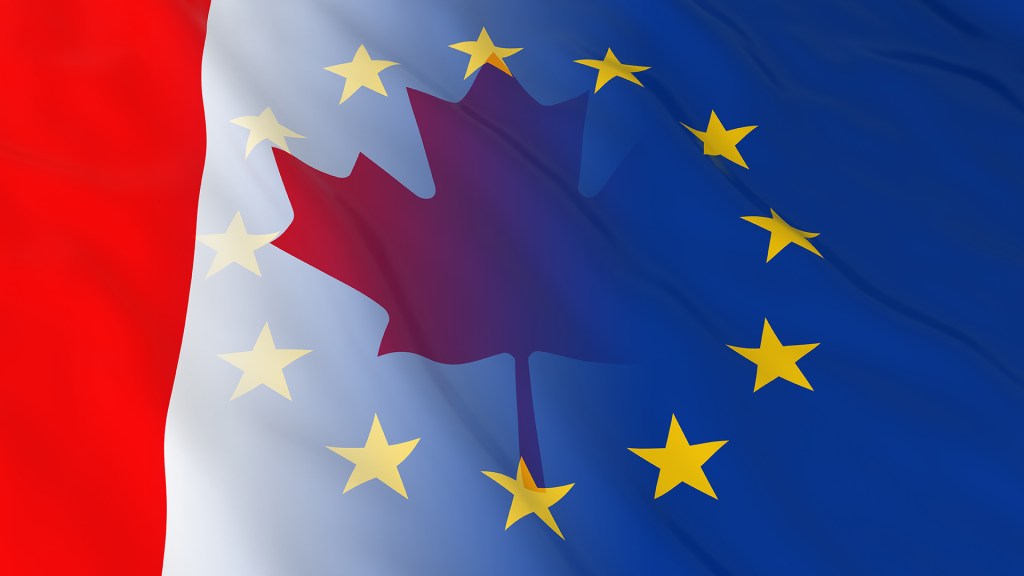
Ahead of the NATO summit, the EU and Canada signed a defense pact in Brussels, with which both parties indicate, among other things, that they will coordinate their international and military activities towards third countries as much as possible. It is of course obvious that both parties will diversify their interests and seek cooperation, given the recent movements and statements from Washington DC.
Although the NATO summit the following day showed great North Atlantic solidarity and was extremely successful in keeping the American president on board – by increasing defence spending to the historic 5% as demanded by Trump – the alliance is still in a weaker position than during the Cold War.
For Canada, the step towards a defense pact with the EU is an excellent, but somewhat provocative move. The country is indirectly indicating that it does not care about the offers and threats from its southern neighbor and does not intend to become the 51st state of the US. But for Europe, the pact is not without risk. What are our interests in Canada?
Canada is a sovereign state, with a parliamentary democracy and a European monarch as head of state: King Charles III of the United Kingdom. The country is still largely populated by descendants of Europeans: English, Scots, Irish, French, Germans, Ukrainians, Dutch, etc. Politically, the country seems to be much closer to Europe in many areas than to the US.
On paper, Canada is a very attractive partner with its almost 42 million inhabitants, a large and highly developed economy and enormous potential in energy, mining and rare metals. It is important that Europe does a lot of business with the country, and quickly.
In terms of demographics, the country is changing rapidly. Relatively recently arrived Chinese, Indian and Filipino minorities are growing fast and, with a combined share of 10% of the population at present, will almost certainly take up a much larger cohort in the future. And for Canada, it will almost certainly mean that the country will focus even more on Asia.
Due to its geographical location along the northern border of the US (and with Alaska to the west), Canada’s infrastructure has become completely intertwined with that of its neighbor. For example, part of Canada’s pipelines and electricity grid run through American territory and anyone who wants to drive from Vancouver to Toronto be advised to take the much faster route through no less than seven American states.
Militarily, Canada is completely at the mercy of the US, with which it has set up NORAD, the joint air defense against possible attacks from Russia or China. Have no illusion: in times of emergency, the US will have to take over the defense of Canada, just as it will with regards Greenland.
The CETA trade agreement between the EU and Canada initially caused some problems, but now trade seems to be taking off. Between 2016 and 2024, trade in goods and services between the two parties increased by 72% and the EU has a large trade surplus with Canada.
For the time being, Canada will of course remain an independent state. Prime Minister Carney is a smart leader and for the time being Trump has ruined it for Carney’s biggest rivals from the Canadian Conservative Party. But there is certainly great potential for that party, as it was the obvious winner of the Canadian federal elections for a long time before the current American president came on the scene.
A secession from the conservative and oil-rich province of Alberta, long cherished by many of its residents, also seems unfeasible for the time being. It would also result in a bizarre border. There is no doubt that MAGA Republicans dream of annexing Canada, but maybe not the entire country. Leftist Canada would only vote for the Democrats and that is of course not convenient for a Republican president. A takeover, with or without a secession procedure, of only western Canada (including the strategic polar regions) is perhaps a future scenario. A conservative majority can usually be found in that area.
For the time being, the chance of that happening is small. The western provinces of Alberta and Manitoba will hold elections in 2027, which will provide a good benchmark. The Americans would do best to wait for a federal election victory for the conservatives in 2029 and then develop closer cooperation between the two countries in a more natural way. After all, Canada and the US are the joint caretakers of the North American continent and they will have to face the future and its many challenges together.
So does Canada pose a political risk to investments from Europe? That of course partly depends on the development of relations between our continent and the US in the near future. But do your business now, because one thing is clear: the battle for Canada is far from over. It has yet to begin.
 Geopolitical Weekly